
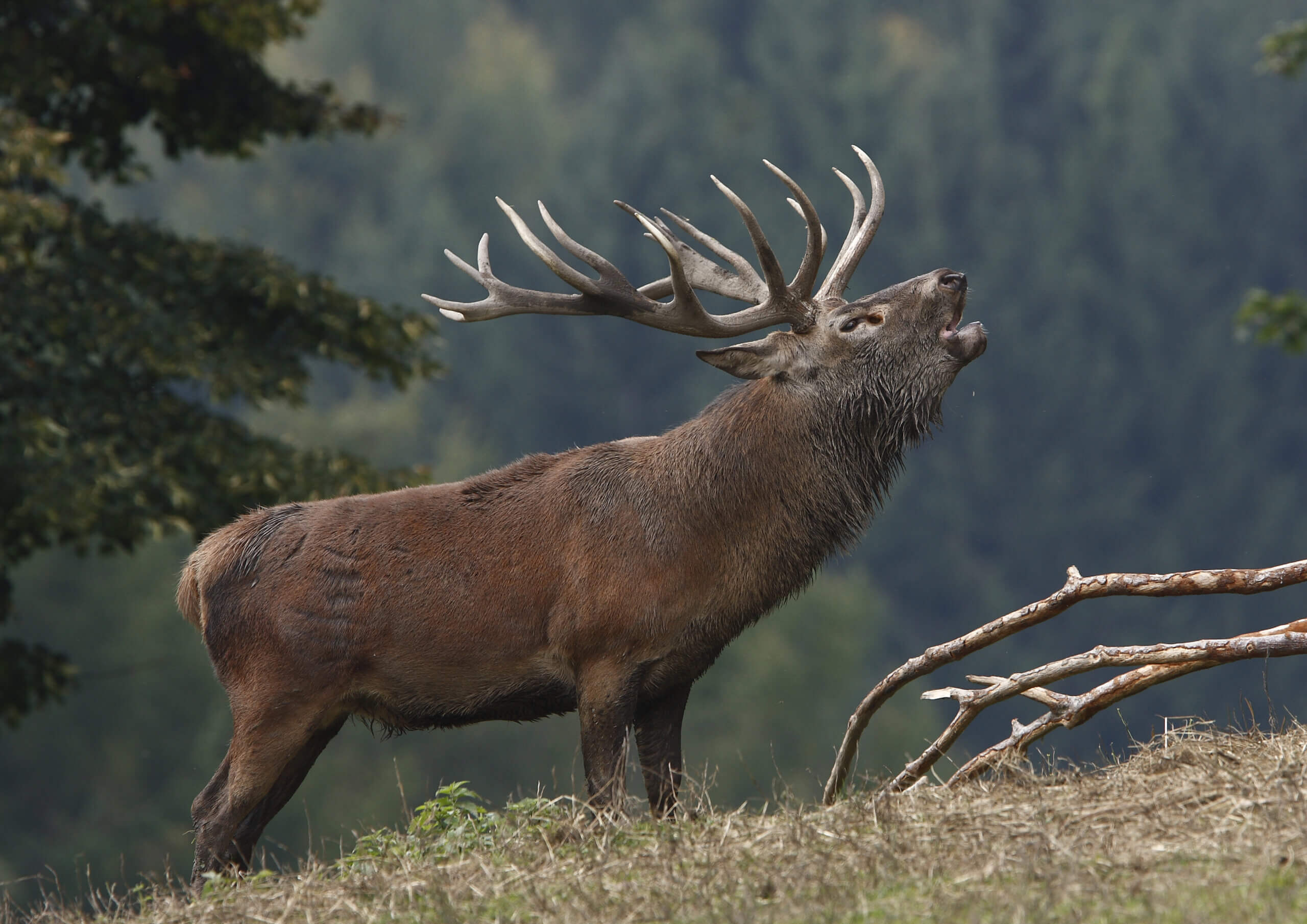

The white-tailed deer are indigenous to both North and South America, but in an interesting form. They are also known for their elegant movements and adaptation to the surrounding environment. This is not their only interesting feature since their survival strategy is heavily dependent on their feeding habits. People who are interested in wildlife, and those who would be participating in the whitetail deer hunts in Texas, need to have a good knowledge of how many times the white-tailed deer eats food. Below, we will explore the complexity of the feeding behavior of whitetail deer, shedding light on the dietary requirements of the species and the factors that determine how often they eat.
Understanding Deer Hunting in Texas
White-tailed deer food is mainly vegetation, including grasses, leaves, shoots, fruits, nuts, and crops. White-tailed deer are classified as herbivores. Their eating habits can vary with the situations, like the food supply they face in the different seasons, the surroundings, and their nutritional requirements. Although white-tailed deer is a herbivorous species, it is an opportunistic feeder, which implies the use of diverse food sources in their ecological range.
Time of the day plays a vital role in influencing the frequency of white-tailed deer consumption of food. The crepuscular nature of these animals suggests that they are very active in the morning and evening hours. They often feed during these low-light periods, and this allows them to forage in the darkness when they are less vulnerable to the attacks of predators. Therefore, white-tailed deer are more likely to eat during such twilight periods because they can get as much energy as possible with minimum risk from predators.
The white-tailed deer might continue to participate in feeding activities even during the day, but to a smaller extent than at night. During the daytime, feeding sessions are not common, especially in areas where there is significant human activity or the number of predators is high. The deer may take shelter in the shady or thickly covered areas to save some of their energy till the later hours of the morning or evening when they resume their usual feeding habits.
Regarding affecting the rate at which the whitetail deer feeds, seasonal changes also have a significant influence. During the spring and summer seasons, deer might graze more often due to rich and abundant vegetation to meet their nutritional needs and stimulate their growth and reproduction. It is during this season that they can graze for hours in a day, grazing on different plant species that are rich in the desired nutrients.
Conversely, whitetail deer can change their feeding habits during the fall and winter seasons, when food availability is less and vegetation is less nutritious. They can also take more time to pick high-energy foods like acorns, browse, and farm crops so that they can survive within the limited number of months. Although their general feeding rate might reduce during the period, deer can adapt to it by consuming larger amounts of food at each feeding period to meet energy demands.
Environmental factors, including the weather conditions and the quality of food that the white-tailed deer feed on, may also influence the frequency of food consumption. Food supply will be very minimal in places where there is extreme weather, like drought or harsh winters. Consequently, the deer might adapt their feeding habit to unfavorable weather. Deer can display greater motion in search of acceptable fodder when there is a shortage of food. This may lead to increased eating intervals in the event of the identification of food sources.
Habitat degradation and fragmentation may also be brought about by human activities and would potentially influence the eating behavior of the white-tailed deer. The destruction of natural vegetation, the growth of cities, and the disturbance of habitat may result in the disruption of the natural eating patterns of the deer and their having to adjust to new food sources. Different feeding behavior in these habitats may include more dependency on food that is provided by humans, such as crops or ornamental plants.
The food requirements of whitetail deer may vary depending on several factors, such as age, sex, reproductive status, and general health. An example is when pregnant and nursing mothers have more energy needs and need to feed more often to help with the growth and development of their young ones. Similarly, the young fawns that are growing at a high rate might be required to have constant access to food rich in nutrition to sustain the demands of their metabolic rates.
To sum up, the feeding behavior of whitetail deer can be determined by a complicated combination of factors like the time of the day, the season, the conditions of the environment, and the specific nutritional needs of the deer. Although these incredible animals are daytime feeders for the most part, their taste and the number of times they use the food may differ significantly depending on the availability of foodstuffs and the conditions prevailing in the environment at a particular time. The fact that the feeding habits of the white-tailed deer are complex is essential to wildlife management and conservation efforts that are aimed at ensuring that this iconic species survives in the long term.