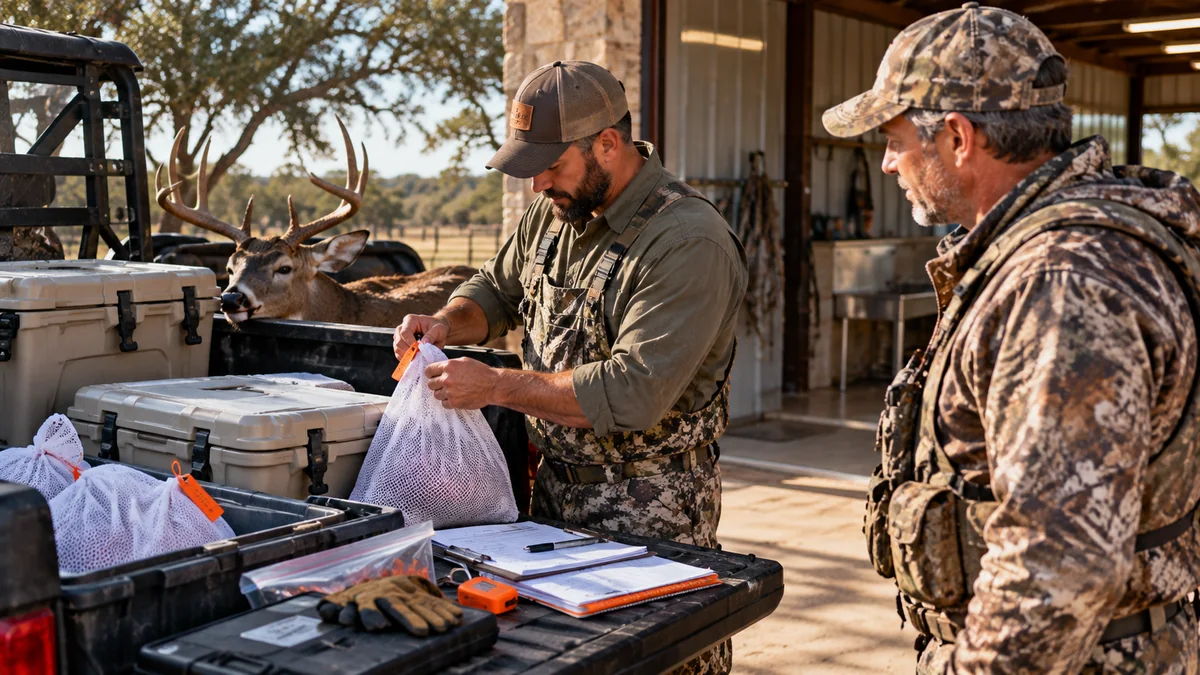

The shot is not the end of a ranch hunt. Once an animal is recovered, the priorities shift quickly to field care, cooling, documentation, trophy preparation, meat handling, and deciding how everything will get from the ranch to its final destination. Good planning after the harvest on a Texas hunt protects the meat, the trophy, and the legal record of the trip.
Squaw Mountain Ranch markets guided whitetail and exotic hunts with field support on more than 2,000 acres near Jacksboro. Because native game and exotic animals can fall under different Texas rules, hunters should confirm the post-harvest process for the exact species before the hunt begins.
The First Priority Is Safe Recovery
After the shot, follow the guide’s instructions before approaching the animal. Confirm the firearm or bow is handled safely, allow the appropriate wait when necessary, and avoid rushing the recovery because of excitement.
Once recovery begins, keep the group organized. One person should focus on the animal and guide instructions rather than turning the moment immediately into photos, gear movement, or vehicle loading.
Field Care Is About Heat, Moisture, and Dirt
Texas Parks & Wildlife’s hunter-education guidance identifies heat, moisture, and dirt as the three major factors that can spoil meat through bacterial growth. TPWD recommends field dressing soon after harvest so the carcass can begin cooling.
Cool quickly: Warm North Texas conditions can shorten the time available before meat quality declines.
Keep it clean: Avoid unnecessary contact with dirt, hair, stomach contents, fuel, or dirty truck beds.
Use clean tools and gloves: TPWD recommends disposable gloves during game cleaning.
Let moisture drain: Meat should not sit in warm water inside a cooler.
Native Whitetail and Exotic Animals Do Not Use the Same Rulebook
This distinction matters at a ranch that offers both native whitetail deer and dozens of exotic species. Texas Parks & Wildlife applies tagging, proof-of-sex, carcass-transport, and processing rules to native game animals such as whitetail deer. Exotic animals on private property have a different regulatory framework.
For the 2026-2027 license year, TPWD states that exotic animals on private property generally have no state closed season, bag limit, or possession limit, but a hunting license is required and hunters must have the landowner’s permission. Do not apply a whitetail tag procedure to every exotic automatically; ask the ranch and verify current TPWD rules for the species.
For Whitetail Deer, Tagging Comes Before Moving or Field Dressing
Current TPWD guidance states that after a deer is harvested, the appropriate license tag or permit must be completed before the deer is field dressed or moved. If a hunting-license tag is used for a white-tailed deer, the harvest log must also be completed.
Proof-of-sex and transport requirements continue to apply until the animal reaches the legally defined destination or processing stage. Current Chronic Wasting Disease requirements can also affect carcass movement in designated zones, so check the Outdoor Annual for the county and season you are hunting.
Ask the Ranch Who Handles Field Dressing
| Post-Harvest Task | Questions to Ask Before the Hunt | Why It Matters |
| Field dressing | Does guide staff handle it, assist, or expect the hunter to do it? | Changes what knives, gloves, and experience you need. |
| Cooling / game bags | Where is the animal cooled and how quickly can quarters or meat reach ice/refrigeration? | Protects meat quality. |
| Caping / hide care | Can the guide prepare the cape for a shoulder mount or full-body mount? | The taxidermist may need a specific cut and amount of hide. |
| Meat processing | Is there an on-site or preferred processor? Is the fee separate? | Determines cooler space, pickup timing, and travel plans. |
| Taxidermy | Does the ranch work with a taxidermist or can it coordinate shipping? | Important for large or unusual exotic trophies. |
| Documentation | What license, tag, proof-of-sex, receipt, or transfer paperwork must travel with the animal or parts? | Prevents problems during transport or processing. |
Decide on the Trophy Before the Knife Work Starts
A shoulder mount, European skull mount, hide, rug, horn display, or full-body mount can require different skinning and preparation. Tell the guide what you want before caping begins.
If you have a taxidermist at home, ask for their preferred cape dimensions and instructions in advance. If you plan to use a local taxidermist, confirm whether the ranch can coordinate drop-off and what paperwork or deposit is required.
Trophy Scoring and Trophy Preparation Are Different Steps
A score documents horn or antler dimensions. It does not automatically prepare the hide, skull, or cape for taxidermy. If you want an SCI-style measurement, photographs, and a taxidermy-ready cape, treat those as separate parts of the post-harvest plan.
Squaw Mountain Ranch’s existing SCI trophy-scoring article explains how measurements vary by species; confirm when scoring occurs and whether green or official measurements are being discussed.
Plan the Meat Destination Before You Arrive
Hunters should know whether they want the meat processed locally, transported home in coolers, shipped, or handled another way before the animal is harvested. Large-bodied species can require much more cooler and freezer capacity than a whitetail deer.
TPWD’s field-care guidance emphasizes cooling meat quickly, and its processing rules for native game animals control how far processing can go before a legal final destination. Ask the ranch and processor how those rules apply to your specific hunt.
Transporting Native Game Requires the Right Documentation
For Texas game animals subject to tagging or possession limits, TPWD has rules governing tags, proof of sex, transfer documents, processing, and transport. A Wildlife Resource Document may be required in certain transfer situations.
For exotics, the documentation framework is different, but possession still needs to be lawful and with the owner’s consent. Keep the ranch receipt, booking record, license information, and any species-specific paperwork accessible during travel.
Coolers: Think About Capacity, Drainage, and the Drive Home
Bring or reserve enough cooler capacity for the animal you are pursuing.
Use clean coolers and keep meat separated from dirty field gear.
Maintain cold temperatures and keep meltwater drained rather than letting meat sit in warm water.
Know how long the drive home is and where additional ice can be purchased if needed.
If the meat is going to a processor, confirm business hours before leaving the ranch.
Create a Post-Harvest Plan Before the Hunt Starts
Tell the guide what trophy or mount style you want.
Confirm who performs field dressing, skinning, caping, and quartering.
Identify the processor or cold-storage plan.
Confirm whether the ranch coordinates taxidermy or shipping.
Verify the legal documentation required for the species.
Estimate cooler/freezer capacity and the travel time home.
Keep contact information for the ranch, processor, and taxidermist.
Before departure, verify that every cooler, cape, horn/antler set, and document is accounted for.
Do Not Let the Last Hour Undo a Good Hunt
A memorable hunt can be diminished by spoiled meat, a poorly cut cape, missing paperwork, or a rushed departure. The best time to solve those problems is before the first morning—not while an animal is already on the ground.
When booking at Squaw Mountain Ranch, review the current hunt options and pricing, lodging, and then contact the ranch to confirm species-specific post-harvest support before travel.
Sources and References
Squaw Mountain Ranch – Exotic Hunts
Squaw Mountain Ranch – Price List
Texas Parks & Wildlife – Field Care of Game
Texas Parks & Wildlife – After Harvesting a Deer
Texas Parks & Wildlife – Cold Storage, Processing and Taxidermy
Texas Parks & Wildlife – Transfer & Importation of Wildlife
Texas Parks & Wildlife – Exotic Species Rules
Regulatory Notice
Texas hunting, tagging, CWD, transport, processing, and wildlife-transfer rules can change and differ by species and county. This article is general planning information. Verify the current Texas Parks & Wildlife Outdoor Annual and confirm the ranch’s current post-harvest procedures before hunting.