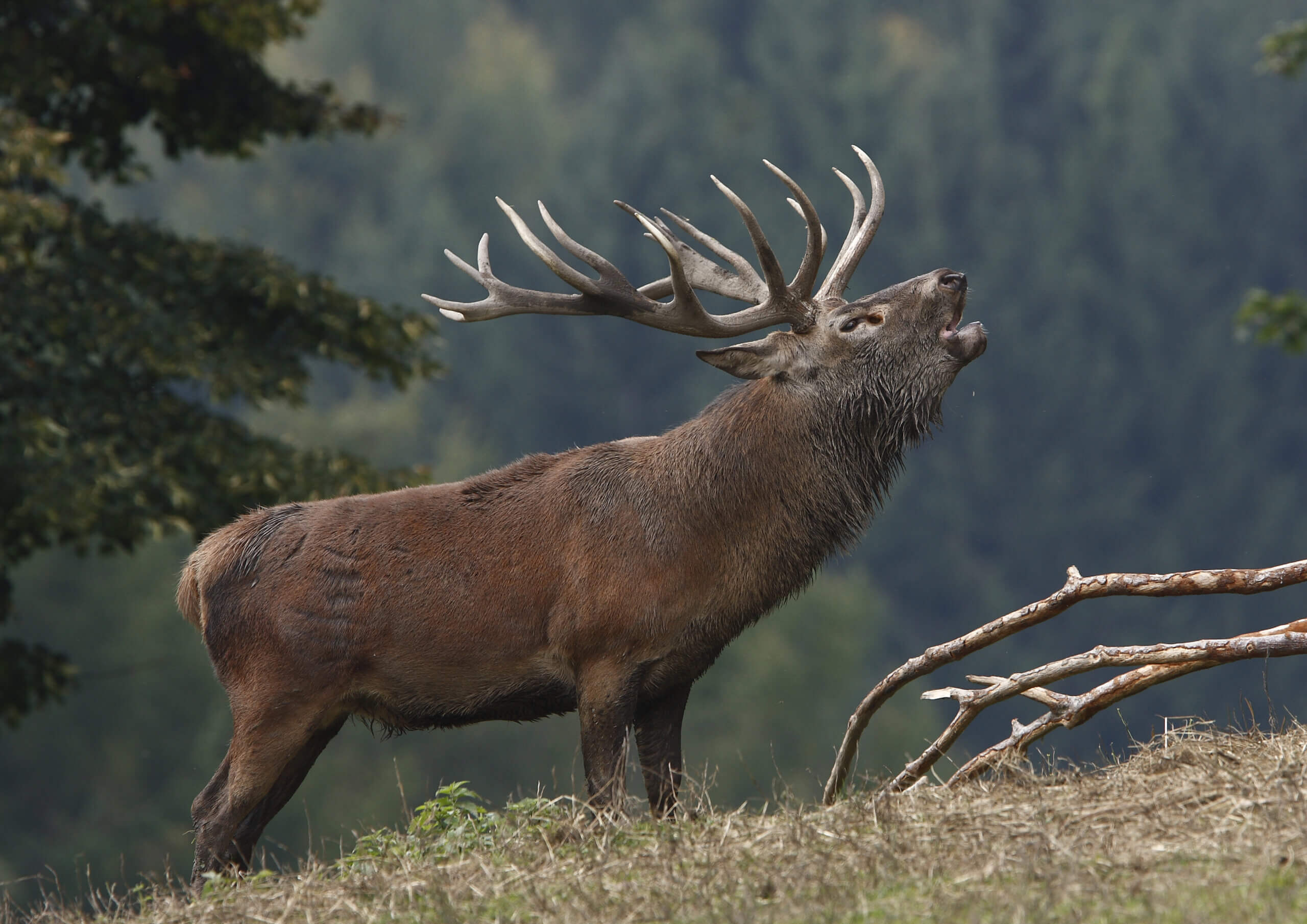

A broad-antlered animal steps out at the edge of the timber. It is large, dark through the neck, and unmistakably part of the deer family. Is it a red deer stag or an elk bull? At a glance, the confusion is understandable.
Red deer and North American elk are close relatives in the genus Cervus. Older references sometimes grouped them more closely than modern classifications do, and common names vary by country. In practical hunting conversations, however, they are treated as distinct animals with different appearance, vocalizations, terminology, and trophy character.
Squaw Mountain Ranch offers both red deer hunts in Texas and elk hunts in North Texas. Knowing the differences helps hunters choose the experience that fits their goals rather than booking based on antlers alone.
Are Red Deer and Elk the Same Animal?
They are closely related, but red deer are generally identified as Cervus elaphus, while North American elk or wapiti are generally identified as Cervus canadensis. Both are large grazing and browsing deer. Both grow impressive antlers. Both become highly vocal and competitive during the rut. That shared ancestry explains why casual observers often mix them up.
The field differences become clearer when you compare the whole animal: body size, neck color, rump patch, antler architecture, voice, and the language hunters use for males and females.
Red Deer vs. Elk at a Glance
| Feature | Red Deer | North American Elk |
| Scientific name | Cervus elaphus | Cervus canadensis |
| Male / female terms | Stag or hart / hind | Bull / cow |
| Typical appearance | Reddish-brown to gray-brown coat; compact, powerful build | Tan or brown body, darker neck, noticeable pale rump patch |
| Antler character | Highly branched frame; mature stags may form a crown at the top | Long sweeping main beams with tall upward-pointing tines |
| Rut call | Deep roar or bellow | High, carrying bugle |
| Hunting impression | Classic European-style stag trophy with dense branching | Larger-bodied North American big-game experience |
Body Size and Proportions
Elk are usually the larger and taller of the two, especially mature bulls. Their long legs, deep chest, and substantial body can make them look almost horse-like at distance. Red stags are also large animals, but they tend to look more compact and dense through the body.
Size alone is not enough. Age, nutrition, genetics, subspecies, camera angle, and distance can blur the distinction. A trophy red stag can appear enormous, while a younger elk may look relatively light. The better comparison uses size together with coat pattern and antler shape.
Coat Color, Neck, and Rump Patch
The name red deer comes from the warm reddish-brown coat commonly seen in the warmer months. The coat can shift toward gray-brown in winter, and mature stags may carry a darker neck during the breeding season.
Elk commonly show stronger color contrast: a tan or brown body, a much darker neck and chest, and a pale buff rump patch. That rump patch is one of the most useful field clues. Red deer can also show a lighter rump area, but it is generally less striking than the classic elk pattern.
Antler Shape: Crowns vs. Sweeping Beams
Both species can grow massive antlers, but the architecture often differs. Elk antlers usually sweep backward on long main beams, with individual tines rising upward in a clean, open pattern. The shape can look long, wide, and symmetrical from the side.
Red stag antlers tend to appear more densely branched. Mature stags may develop a cluster of upper points known as a crown, giving the top of the rack a complex, regal profile. Not every stag forms the same crown, and not every elk follows an ideal textbook pattern, so hunters should avoid identifying an animal from one tine or one photograph.
The Sound of the Rut
Vocalization may separate the two faster than appearance. A rutting elk bull is famous for its bugle—a high, piercing call that can begin with a whistle and break into grunts. A red stag typically roars or bellows with a deeper, rougher voice.
The experience feels different in the field. An elk bugle can carry across ridges and open country. A red stag roar has a heavier, almost primeval quality, especially when several mature stags are competing in the same area. At Squaw Mountain Ranch, September is highlighted as a premier period for red stag rut activity, while elk rut timing also makes early fall a sought-after window.
Behavior During the Breeding Season
Red stags and elk bulls both gather females, challenge rivals, mark territory, and devote enormous energy to breeding. They may parallel-walk, vocalize, thrash vegetation, wallow, and clash antlers when neither rival backs down.
The important lesson for hunters is not that the species behave identically. It is that the rut changes visibility, body condition, temperament, and shot opportunities. A guide who has watched the animals across the season can help interpret what is happening rather than reacting to the first call or movement.
Which Hunt Offers the Right Experience?
Choose a Red Deer Hunt When You Want:
- A classic stag trophy with heavily branched antlers and the possibility of a pronounced crown
- The deep roar and close competition associated with the red deer rut
- A trophy experience often compared with European or New Zealand stag hunting without international travel
- A customizable ranch hunt with guide support, lodging, and multiple approved methods of take
Choose an Elk Hunt When You Want:
- A larger-bodied animal with sweeping antlers and a distinct North American trophy profile
- The sound and excitement of bugling bulls during the rut
- A hunt that may involve more ground, varied terrain, and longer observation distances
- A guided experience built around a chosen trophy class and physical ability
How Texas Changes the Planning Process
Red deer and elk are managed as exotic animals in Texas, so ranch availability does not follow the same season structure as native whitetail deer. That flexibility does not remove the need for planning. Antler stage, rut activity, weather, trophy objectives, ranch schedules, licensing, and current state rules all affect the right date.
Squaw Mountain Ranch recommends late summer through winter for many red stag hunts, with September offering especially strong rut interest. Current opportunities and trophy classes can change, so review the current exotic hunt pricing and speak directly with the ranch before making travel arrangements.
What a Guided Ranch Hunt Includes
A hunt is more than the moment an animal appears. Squaw Mountain Ranch describes an all-inclusive experience with meals, beverages, lodging, expert guide services, stands, blinds, and field equipment. The ranch spans more than 2,000 acres of brushy draws, open flats, and elevated ridgelines in Jack County, less than two hours from the Dallas/Fort Worth area.
Guests can review the available exotic hunts in North Texas and the ranch’s private hunting lodging. The guide can then match the hunt to the guest’s experience, mobility, preferred method, and trophy goals.
Questions to Ask Before Booking
- Which animal do I want to pursue? Ask to see representative red stag and elk trophies rather than choosing from a name alone.
- What antler stage do I prefer? Velvet, hard antler, and post-rut timing create different visual and hunting experiences.
- What trophy class fits my budget? Confirm how the ranch measures and prices the available animals.
- What is included? Clarify daily rates, lodging, meals, guide services, field transportation, and post-harvest logistics.
- What equipment and documents should I bring? Confirm current Texas requirements, ranch rules, recommended equipment, and expected distances.
Plan a Red Deer or Elk Hunt in North Texas
Red deer and elk share an impressive family resemblance, but the hunt, trophy, and sensory experience are not interchangeable. Red stags bring dense antlers, crowns, and deep rutting roars. Elk bring larger bodies, sweeping beams, and the unforgettable sound of a bugle crossing the ranch.
The right choice depends on what you want to remember years later. Review the hunt pages, discuss the trophy class, and contact Squaw Mountain Ranch for current dates and package details.
Frequently Asked Questions
Are red deer and elk the same species?
They are close relatives and were historically classified together in some references, but modern wildlife and scientific sources generally treat red deer as Cervus elaphus and North American elk as Cervus canadensis. Their appearance, calls, terminology, and typical geographic history also differ.
What is a male red deer called?
A male red deer is called a stag or hart, and a female is called a hind. By contrast, male elk are bulls and females are cows. “Red stag hunt” and “red deer hunt” therefore describe the same target species when the animal being pursued is a male red deer.
When is the best time to hunt red deer in Texas?
The ranch offers flexible Texas red stag opportunities and commonly recommends August through February, with September especially attractive for rut activity. Hunters seeking velvet or hard-antlered stags should discuss the preferred look and current herd conditions before selecting dates. Always confirm current state requirements and ranch availability.
This article is educational. Hunt dates, licensing, methods, package inclusions, and legal requirements can change; confirm current Texas regulations and all details directly with the ranch before travel.